
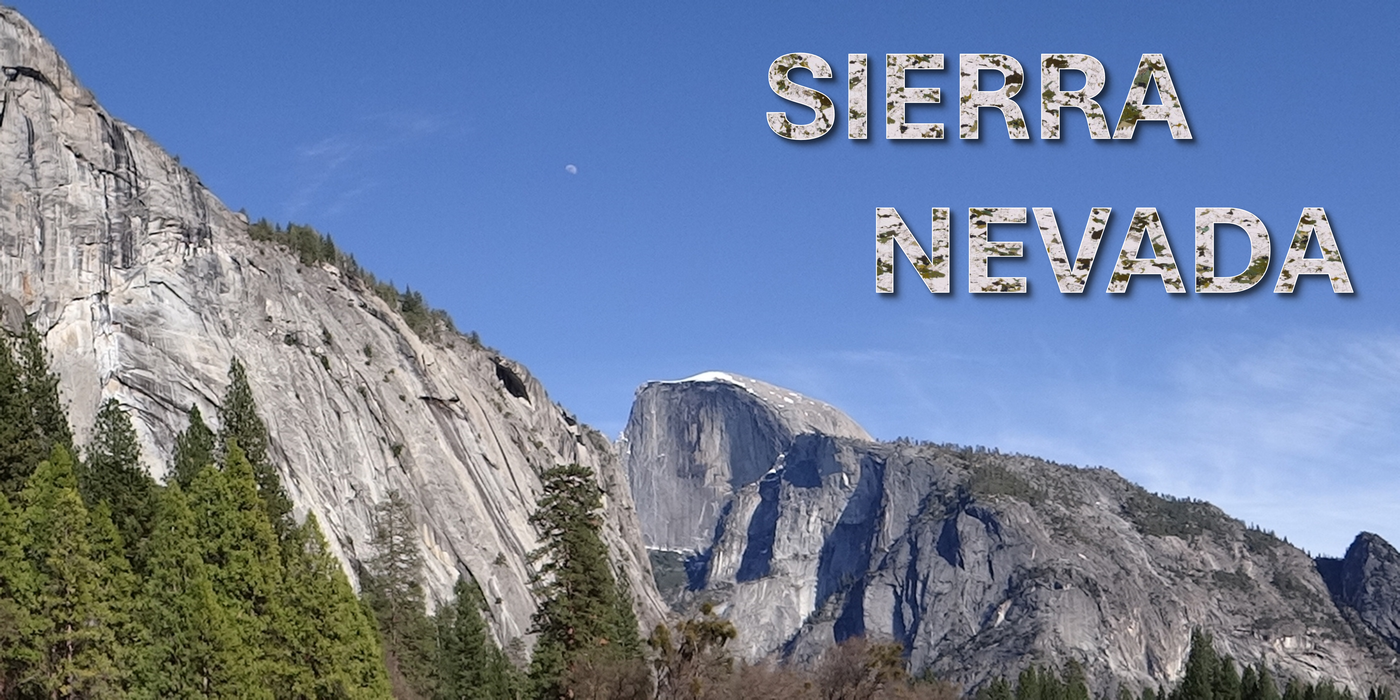
New collection: classic samples from the Sierra Nevada batholith
As well as the iconic landscapes of Yosemite and Sequoia National Parks, Sierra Nevada is a classic example of a batholith formed along an active continental margin. As the Farallon Plate subducted eastwards under western North America, it released volatiles that triggered partial melting of the overlying mantle. These magmas ascended into the crust, evolving and assimilating crustal material, eventually crystallising as numerous igneous plutons with a range of compositions.
This new Collection showcases samples collected during early campaigns by United States Geological Survey mappers including Paul C. Bateman, James G. Moore, Donald C. Ross and Franklin C.W. Dodge. These samples form the core of a reference collection of compositions, textures and ages of rocks from different plutons across the batholith.
The Sierra Nevada collection was created by a partnership between the Virtual Microscope and a trio of researchers from the United States: Jade Star Lackey (Pomona College), Emily Cooperdock (Brown University) and Jaime Barnes (University of Texas, Austin), funded by United States National Science Foundation Grants EAR-2211241, -42, and -43.
Browse this new Collection here: Sierra Nevada